
How to Search the Jefferson County Court Docket
Start with the court on your notice, citation, or order. A Jefferson County docket search splits from there. Circuit Court matters run through the West Virginia Public Access Search System, known as WVPASS. Magistrate cases use a separate tool, the Magistrate Record Search. Neither one replaces the Jefferson County Circuit Clerk or Magistrate Clerk when you need a current court date, a document, or a certified copy.
Before searching, gather the full party name, the court, and the exact case number. Keep every dash and letter on the paperwork. Assume nothing about where a ticket landed. Municipal citations belong to the issuing city, not the county Magistrate system. Family Court and other confidential matters may never show up as ordinary public docket results.
- Read the document and identify Circuit, Family, Magistrate, or municipal court.
- Open WVPASS for Circuit records or Magistrate Record Search for Magistrate records.
- Search by exact case number when possible, then try the party name if needed.
- Read the register for filings, orders, settings, and the latest disposition.
- Call or visit the correct clerk to confirm a date or request a certified copy.
Jefferson County Docket Gateways
West Virginia runs its online court records through two branches. The West Virginia Court Record Access gateway is the doorway to both. WVPASS covers Circuit Court records in all 55 counties. Magistrate Record Search covers Magistrate Courts statewide. The split matters in Jefferson County. The Circuit docket holds general-jurisdiction cases and appeals, while the Magistrate docket carries limited civil, misdemeanor, preliminary criminal, traffic, and protective-order matters.
The Magistrate search is free. It takes a name or case number. It returns no more than 30 results and shows no document images. Its disclaimer warns that data may be incomplete and belongs with a clerk's check. WVPASS serves the Circuit route. Its public access may open at a login screen, though. When a system blocks you or omits a filing, use the public terminal or the clerk's counter.
| Gateway | Jefferson County coverage | Best fallback |
|---|---|---|
| WVPASS | Circuit Court case information | Circuit Clerk and public terminal |
| Magistrate Record Search | Magistrate case information | Magistrate Clerk |
| Municipal court | City ordinance, parking, and local traffic | The issuing city's court or clerk |
Citation payment is a fourth, narrower channel. West Virginia's Magistrate Court Payment System accepts a Citation ID, an optional Citation County, a Case ID, or a Payment Plan ID. It exists to locate an eligible payment after a plea agreement and fee assessment. The tool is not WVPASS, not MCRSearch, and not a certified-copy service. A payment confirmation proves the transaction. It does not prove every judicial act.
Municipal records add a layer. Charles Town, Ranson, Shepherdstown, Bolivar, and Harpers Ferry each run local court functions. No shared city-docket portal ties them together. The issuing agency and court line on the ticket tell you where to call first. If an appeal later reaches Circuit Court, search the city record and the Circuit record separately.
What a Court Docket Shows
The Jefferson County court docket is a chronological register, not the whole case file. It lists the parties by role. It records when a pleading arrived, shows a hearing setting, and states an outcome. CourtPLUS calls it a register of actions. A document may sit behind an entry. Whether you can open it depends on the case type and any sealing rule.
| Case Number | The court-assigned identifier; preserve its exact letters, dashes, and digits. |
|---|---|
| Parties | The case style identifies parties by roles such as plaintiff, defendant, State, or respondent. |
| Docket Entries / Filings | Dated pleadings, motions, notices, service returns, and orders. |
| Hearing Settings | The scheduled date, time, event type, and sometimes the assigned judge or place. |
| Court & Judge | The court level and judicial officer tied to an entry. |
| Disposition | The outcome, such as dismissal, conviction, acquittal, judgment, settlement, or other closing action. |
A docket entry proves an event was recorded. It rarely shows the filing's full text. Ask the clerk for the document or a certified copy when exact language matters.
Many terms name a step, not a result. An arraignment addresses the charge and plea process. A motion asks the court to act. A setting puts a hearing or trial on the calendar. A continuance postpones that date; a reset supplies a new one. Only a disposition or judgment shows how the case or a claim ended. Read entries in date order. That habit keeps a moved hearing from looking like a dismissal.
Jefferson County CourtPLUS Docket Records
CourtPLUS and West Virginia E-File support clerk review, judicial action, service, and the electronic register of actions for Circuit and Family Court. Jefferson County joined the active e-filing counties on November 1, 2016. The statewide CourtPLUS rollout finished on July 15, 2024. Those dates mark court technology. They promise no open online file for every case.
An electronically filed order carries an alpha-numeric reference code in its upper-left corner. The Judiciary's Verify an Order tool checks that stamp. Registered attorneys and eligible filers use E-File. Self-represented litigants may still file on paper. Sealed material follows paper-filing rules too. For docket access, the public uses WVPASS or the clerk, never the attorney sign-on.
Typical flow: Filing › clerk review › judicial action › service › register entry › disposition.
CourtPLUS also keeps a digital repository called Vault for scanned paper documents. That detail matters with older entries. A filing may appear in the register yet open no public image. Ask the Circuit Clerk where it lives. It may be the paper file, Vault, a public terminal, or restricted access. System trouble goes to technical support. Questions about a deadline, a setting, or a filing procedure go elsewhere. The judge, the clerk, the rules, or the state code govern those.
Which Courts Keep Dockets
Jefferson County forms the Twenty-Eighth Judicial Circuit. Circuit Court is West Virginia's general-jurisdiction trial court of record. Family Court handles limited domestic-relations matters. It shares Family Court Circuit 24 with Berkeley County. Magistrate Court takes the county's lower-tier criminal, civil, traffic, and protective-order work. Municipal courts keep separate city ordinance dockets.
| Court | Docket Covers | Where to Search |
|---|---|---|
| Jefferson County Circuit Court | Felonies, general civil and equity cases, selected misdemeanors, juvenile matters, and lower-court appeals | WVPASS or Circuit Clerk |
| Family Court Circuit 24 | Divorce, support, custody, paternity, and related domestic matters | Circuit Clerk, subject to confidentiality rules |
| Jefferson County Magistrate Court | Limited civil cases, small claims, traffic, misdemeanors, preliminary criminal matters, and protective petitions | Magistrate Record Search or Magistrate Clerk |
| Municipal Courts | Local ordinance, parking, and municipal traffic cases | The city court named on the citation |
Two courts split the civil work in Jefferson County. Circuit Court handles law matters above $7,500 under state law. Magistrate Court reaches civil matters of no more than $20,000. It also takes certain possession cases where title is not disputed. The limits overlap. So the court where the case was filed and its case number tell you more than the dollar amount alone.
Appeals ride their own dockets. Civil, Family Court, guardianship, and conservatorship appeals go to the Intermediate Court of Appeals of West Virginia. Criminal and juvenile matters go up the chain as well. Child-abuse-and-neglect cases and other assigned matters go to the Supreme Court of Appeals of West Virginia. Both courts publish appellate calendars and docket tables. None of that substitutes for a Jefferson County trial setting.
Four Jefferson County Docket Offices
Charles Town spreads its court work across a few addresses. They sit within easy reach of one another. The historic Courthouse at 100 East Washington Street still holds court. Magistrate Court and a Circuit courtroom sit in the Judicial Center. That building is 110 North George Street. The Circuit Clerk keeps Circuit and Family files at the Old Jail Annex. That address is 119 North George Street, Suite 100. Probate and county-record customers now go to the County Clerk. That office sits at 393 North Lawrence Street, Suite 135.
That last address trips people up. The County Clerk's 2026 move to the Government Center did not move the Circuit docket. Jacqueline C. Shadle's office handles probate, estates, land, vital, and other county records. Tina Renner's Circuit Clerk office still holds the Circuit and Family case files. The official Jefferson County landing page gathers the county's court and legal links in one place.
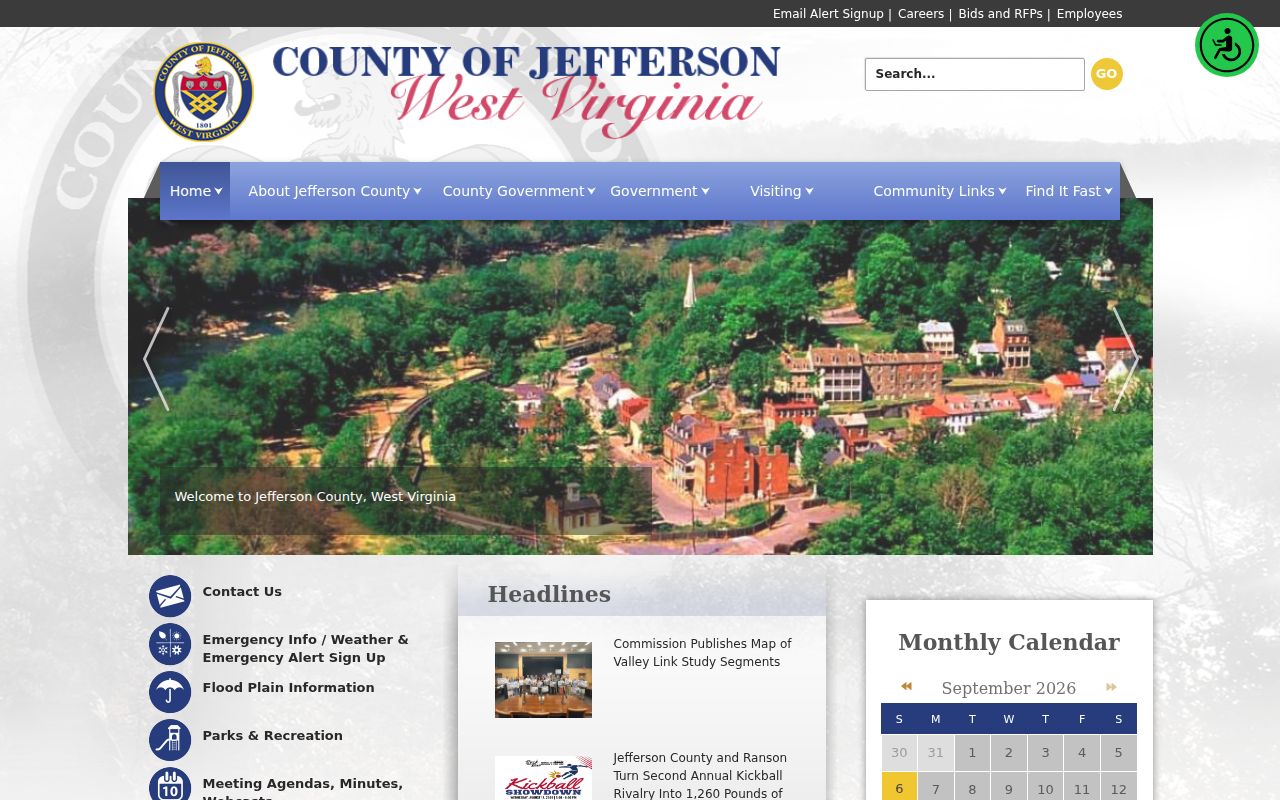
Think of the county page as a routing tool. To confirm an actual case, go to the court portals and the clerks themselves.
Bring the case number and name the item you want. At the Circuit Clerk, request the register of actions, a named order, or a certified judgment. Do not ask staff to dig through the whole dispute. At Magistrate Court, say whether the matter is criminal, civil, traffic, or protective. Probate and estate filings belong to the County Clerk. That office keeps no Circuit Court docket, though.
Finding Court Dates and Settings
A Jefferson County court date shows up in more than one place. The docket event, a summons, a signed hearing notice, or the clerk's current calendar may each carry it. No single daily public calendar blends Circuit, Family, Magistrate, and municipal settings for Jefferson County. When they conflict, trust the latest signed order or the notice the filing clerk confirms.
An entry marked continued, reset, status, or rescheduled does not close a case. Look ahead to the next event on the docket. The full Jefferson County court calendar walkthrough lays out each confirmation route. A municipal setting belongs to that city court, so call it there. A county Magistrate schedule never overrides a town's summons.
Hours help with calls. Jefferson County Magistrate Court runs 7:30 a.m. to 4:30 p.m. It closes from noon to 1:00 p.m. Weather closures are posted at 304-728-1983. Shepherdstown posts its local docket details. Municipal Court convenes the third Wednesday of each month at 5:30 p.m., though the summons still controls the date and place. Harpers Ferry must hold court at least monthly by law, yet it publishes no public daily settings search.
Missing a date brings quick consequences. Shepherdstown cautions that failure to pay or appear can trigger a capias. That is an order to take a person into custody, plus added fines. Missed a Circuit or Family setting? Call the Circuit Clerk. Missed a Magistrate one? Call the Magistrate Clerk. Do not sit and wait for an online entry to change first.
Jefferson County Magistrate Docket Limits
The official Magistrate Record Search description draws sharp limits. The free search takes a name or case number, caps output at 30 results, and shows no document images. Treat it as a locator. It points to a case and basic event data, but the signed order or certified disposition must come from the clerk.
Quick answer: A no-result search does not prove there is no Jefferson County case. Check spelling, court level, exact number, confidentiality, and the city shown on a citation before calling the clerk.
The court-record gateway itself is a neutral interface with no private case data on display.
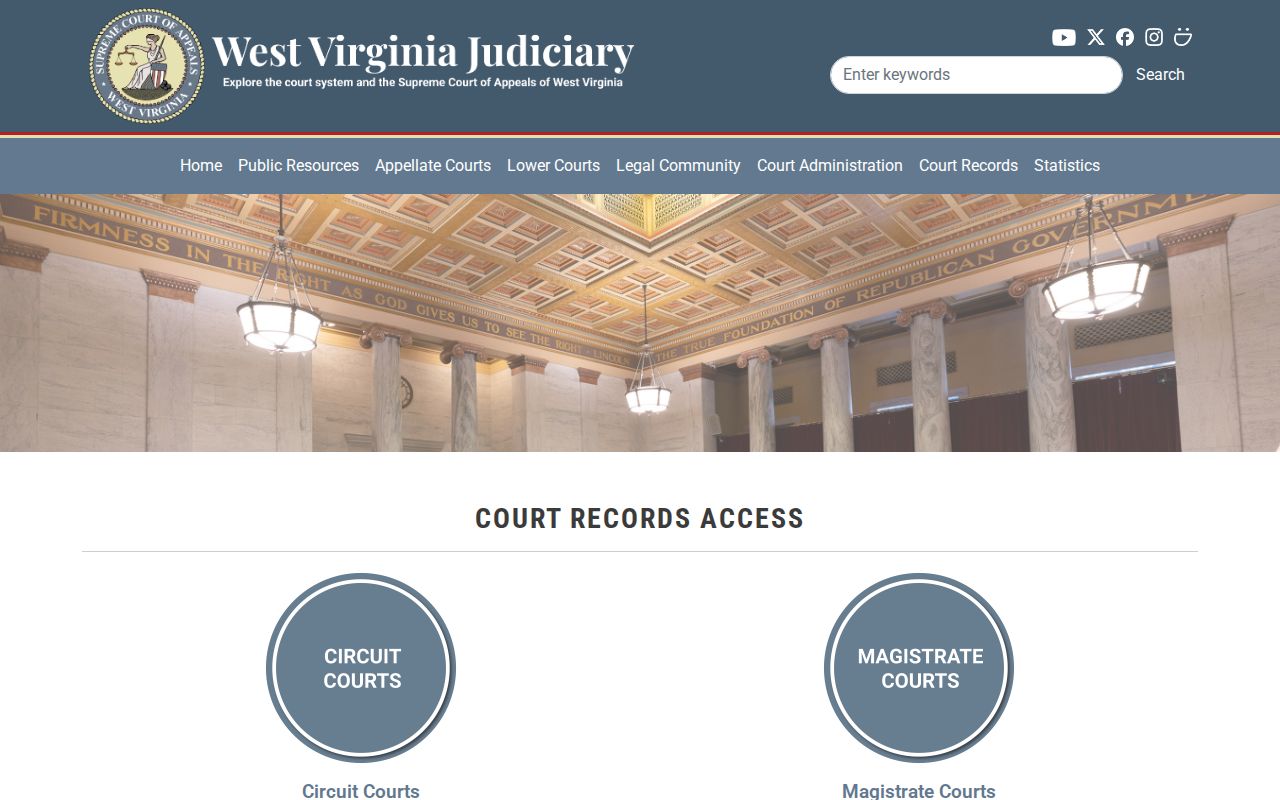
The systems are split. That explains why one search sometimes is not enough for a complete docket picture.
Case numbers often beat names for precision. The payment interface shows Magistrate examples such as ##-M##X-##### and M##M-##########. It also shows a payment-plan pattern of MC##-#####. These are interface samples, not a promise that every docket follows one format. Copy the identifier from the summons, order, or citation exactly.
Public Access to Dockets
West Virginia law begins with public inspection. But statutes, court rules, and sealing orders set real limits. Open Jefferson County court records may be inspected through the custodian during usual business hours. A clerk may supervise review to protect file integrity. The office does not have to build a new report. Nor must it read an entire file over the phone.
Key Rules:
West Virginia Code § 51-4-2 makes court records open to inspection and directs clerks to furnish copies unless another rule restricts access.
West Virginia Code § 29B-1-3 provides inspection and copy rights, electronic production when requested, and a response deadline of no more than five business days as defined by the statute.
West Virginia Code § 29B-1-4 lists exemptions while preserving a presumption that public records remain accessible.
Some files sit outside public view. Family cases, juvenile matters, expunged proceedings, mental-hygiene material, and sealed documents all call for separate handling. Public Family Court indices and orders are different. They may still be inspected at the Circuit Clerk's office, even when the case file itself stays confidential.
A written public-record request works best when it names the office holding the record. It should also describe what you want with reasonable detail. The Freedom of Information Act lets that office produce copies, set a time and place for inspection, or deny the request in writing with a reason stated. The law sets the response window at as soon as practicable and no more than five days, excluding Saturdays, Sundays, and legal holidays. Even so, that clock does not guarantee fast delivery of a large or protected court file.
Restricted Jefferson County Docket Records
When a Jefferson County docket search comes back blank or thin, a legal restriction may be the reason. Family Court Rule 6 generally closes family files and proceedings. Parties and other authorized people can still get in. Juvenile records stay nonpublic under West Virginia Code § 49-5-103. Civil Rule 5.2 limits personal identifiers and allows sealing or unsealing by court order.
Expungement works its own way. An order granted under West Virginia Code § 61-11-26 pulls electronic proceeding information off the public website. It also moves courthouse material into a secure area. Sealed documents must be paper-filed under CourtPLUS guidance. The public electronic register, in short, may show less than the court's full controlled file.
- Sealed
- Access is limited by a court order.
- Confidential
- A statute or rule restricts who may inspect the material.
- Expunged
- A qualifying record is sealed and removed from the public website under statute.
- Index
- A limited public listing that can remain open even when the fuller file is closed.
Juvenile proceedings stay closed, apart from participants a rule allows in. One exception exists. A matter transferred to adult criminal jurisdiction can become public. The transfer and appeal conditions must be met first. Civil filings face their own limits. They cover Social Security numbers, financial account data, dates of birth, addresses, and identifying details for protected people. That is why an open docket sometimes lists only initials or a descriptive label.
The Clerk and Docket Records
Jefferson County splits record-keeping among three offices. Circuit Clerk Tina Renner holds Circuit and Family pleadings, orders, and case files. Magistrate Clerk Shayna Mason keeps Magistrate case records. County Clerk Jacqueline C. Shadle handles probate and county records, not the Circuit docket. So name the court and the item you want. Ask for a docket sheet, order, judgment, or certification by name.
Jefferson County Circuit Clerk
119 North George Street, Suite 100
Charles Town, WV 25414
304-728-3231
Monday through Friday, 9:00 a.m. to 5:00 p.m.
Jefferson County Magistrate Clerk
110 North George Street
Charles Town, WV 25414
304-728-3233
Monday through Friday, 7:30 a.m. to 4:30 p.m.; closed noon to 1:00 p.m.
The Circuit Clerk offers a public-access terminal for some open case types. Staff can explain office procedure, though they cannot give legal advice. The Magistrate office takes in-person and mailed filings. It bans cell phones and recording devices inside the Judicial Center. The official Circuit Clerk page lays out the public terminal. That page also explains its role with case records and how visitors use it.
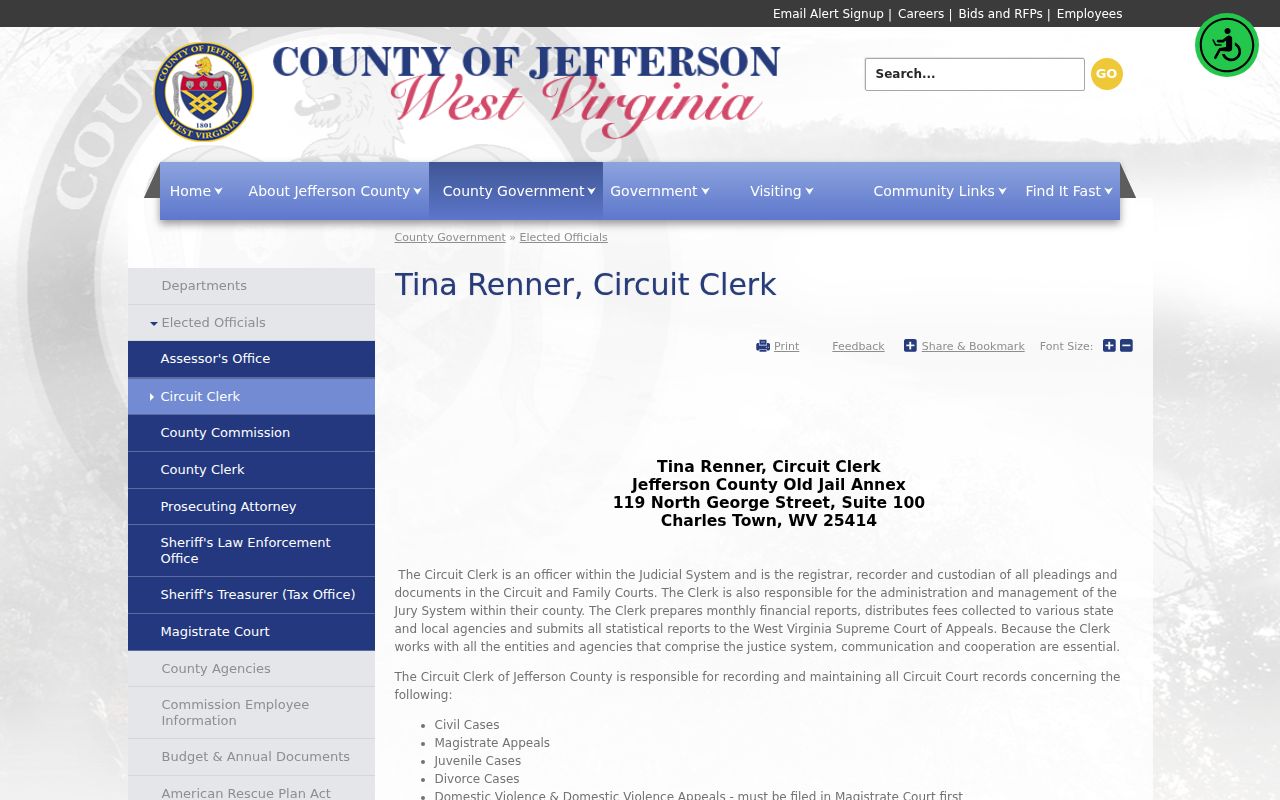
Circuit and Family docket questions start with the clerk's office. For mail requests, list the case and the case number. Also name the document, the copy type, and a return contact. The clerk can quote the charge and explain how to pay. A phone call helps confirm which office holds the file. Trial Court rules do not require staff to read an entire file aloud. Plan on an in-person look instead. Ask for a supervised area that keeps the original court record intact.
Jefferson County Docket Copy Fees
A screen result is not a certified file. West Virginia Code § 59-1-11 sets the Circuit Clerk's charges for specific services. Copies run $1 per page. A certified copy costs $15. A $25 bond-processing fee applies to each bond except a qualifying personal-recognizance bond. Ask the clerk for a current quote before sending payment. The record and service you pick control the total.
| Circuit Clerk item | Researched amount |
|---|---|
| Copy | $1 per page |
| Certified copy | $15 |
| Bond processing | $25 per statutory bond, with the noted recognizance exception |
West Virginia FOIA permits actual reproduction costs. It bars search or man-hour fees on a public-record request. Court copy fees can still apply under court statutes and rules. So a requester should tell a FOIA request apart from a clerk certification service.
Certification matters when a receiving office needs the clerk's attestation. The clerk confirms the copy matches the official record. A plain copy may be enough for personal review. State law also lists filing, transcript, appeal, criminal, and bond charges. Those are not all record-copy fees. Ask for a line-item quote tied to the exact service. Never treat one figure as the total.
Jefferson County Docket Record History
The official courthouse history adds unusual context to today's Jefferson County court records. During the Civil War, county files traveled to Lexington for safekeeping. The courthouse was damaged in 1863. Charles Town restored it in 1872. The Supreme Court of Appeals met there from 1873 through 1912. A 1910 annex added court and clerk spaces.
The building still works as a courthouse, not just a landmark. Modern Jefferson County court records now span several forms. Paper files, the public terminal, CourtPLUS entries, and scanned Vault material all count. That path from physical safekeeping to electronic custody explains something. Older and newer records may need different retrieval methods.
Hosting the state's high court for nearly four decades tied the county's trial work to a stretch of statewide appellate work. Current appellate dockets appear on Judiciary pages, with calendars and archived searches. Historical research may still land at local paper holdings. There, an appointment or staff-assisted inspection protects fragile files.
Jefferson County Magistrate Appeal Dockets
An appeal out of Magistrate Court opens a second file. The Circuit Court record begins fresh. Yet the lower docket still tells the first half of the story. Anyone tracing a Jefferson County case from start to finish needs both. Look for the complaint, the hearings, and the judgment on the Magistrate side first. The Circuit register picks up from there. It carries the appeal filing, orders, settings, and the higher court's final action.
Municipal appeals work the same way. Start with the city case number. Then check whether a Circuit Court appeal number was ever assigned. Civil Circuit and Family appeals generally move on to the Intermediate Court of Appeals. Criminal, juvenile, and abuse-and-neglect appeals instead route to the Supreme Court of Appeals. That routing is assigned by law.
Certain entries give the game away. A notice of appeal points to a second layer. So do a transcript or record arrangement, a supersedeas request, an appellate case number, a transfer, or a mandate. A mandate is simply the higher court's order handing authority back down. It can close the appellate phase while more action continues in Jefferson County. Pull only the newest docket and you may miss the original complaint, hearing, and judgment entirely.
Jefferson County Docket Filing Mix
Which Jefferson County court holds a case matters. The West Virginia Judiciary's 2024 annual statistics show why. Circuit Court logged 194 criminal filings that year. It also logged 514 civil filings and 202 juvenile filings. The criminal group broke down further. It held 114 felonies, seven Magistrate appeals, four misdemeanors, and 69 other criminal cases. Civil filings included 266 general civil matters and 103 personal-safety appeals. The juvenile group held 136 child-abuse-and-neglect matters, 53 delinquency cases, and 13 status offenses. Those are filing counts, not a live caseload. They predict nothing about any single docket.
The Magistrate layer carried far more routine criminal volume that year. It logged 262 felony filings, 2,444 misdemeanors, eight worthless-check matters, and 27 juvenile filings. On the civil side, the table shows 1,009 small claims. It adds 128 personal-safety petitions and 256 domestic-violence-related entries, totaling 1,396. Treat all of this as context. The numbers describe filings, not pending work or any one case's path.
Family Court kept its own count. It recorded 221 divorces, 133 modifications, and 58 contempt filings. Jefferson and Berkeley share Family Court Circuit 24. A Jefferson case may involve a judge whose office sits in Berkeley County. The signed case notice and clerk confirmation control where the hearing happens. Never let online statistics override an official notice.
Court Dockets by City in Jefferson County
City ordinance, parking, and local traffic cases live in municipal courts, not the county system. Jefferson County's five largest incorporated places by the 2020 Census each run their own court. Public access differs from city to city. Charles Town has a court structure but posts no public docket portal. Ranson offers a municipal payment page. Shepherdstown publishes a direct court schedule and clerk contact. Bolivar and Harpers Ferry document their courts through local ordinances.
Start any local ticket with the issuing court printed on it. State-law citations assigned to Jefferson County Magistrate Court can go through the Magistrate search and payment routes. A city ordinance ticket stays with the municipal court. An appeal or other action creates a Circuit record. A payment vendor's receipt is not the same as the docket's disposition entry.
The population figures on these cards come from the official 2020 Census vintage. They measure place size, nothing more. Current estimates exist for the larger cities. Mixing them with the ranked Census table invites error, and neither number says how many cases a municipal court handles.
Each city page follows the record outward from the municipal clerk. A local citation may not be online. Call the city office. Give them the citation number, the name as printed, the issue date, the violation, and the disposition you need. Ask whether the copy is plain or certified, and whether an appeal number exists. County Circuit copy fees do not set a city's fee. Get the municipal charge quoted directly. Keep the summons or citation close at hand. Its court name, case number, and date are the best routing clues.
Charles Town Court Docket
6,534 · Municipal clerk or City Hall is the starting point for city ordinance cases.
Ranson Court Docket
5,433 · Ranson Municipal Court publishes a payment channel, but payment is not the full docket.
Shepherdstown Court Docket
1,531 · The court publishes a monthly schedule and a direct clerk contact.
Bolivar Court Docket
1,036 · Article 143 requires a municipal docket; no public web search was located.
Harpers Ferry Court Docket
269 · Article 171 requires monthly court, while WVGoPay handles police citation payments.
Map and Directions to the Jefferson County Circuit Clerk's Office
Circuit and Family Court files are kept at the Circuit Clerk's office, 119 North George Street, Suite 100, in Charles Town, the county seat. The office sits directly behind the historic Jefferson County Courthouse at North George and Liberty Streets, where Circuit Court chambers and proceedings are held; the two buildings are separate stops for the same court. Magistrate Court records are kept a short walk away at 110 North George Street, and probate and county records are at the Government Center on North Lawrence Street.
Jefferson County Circuit Clerk
119 North George Street, Suite 100
Charles Town, WV 25414
304-728-3231
Monday through Friday, 9:00 a.m. to 5:00 p.m.
Cell phones and recording devices are barred from the nearby Judicial Center, and county sources do not otherwise describe a parking map or ADA entrance procedure for the Circuit Clerk's office, so calling ahead for an accommodation or an older file is the safest approach.